ASU graduate steps into leadership role in sports psychology field
Part of the programs first graduating cohort, Jake Land turns hands-on experience into a director position at Valley practice
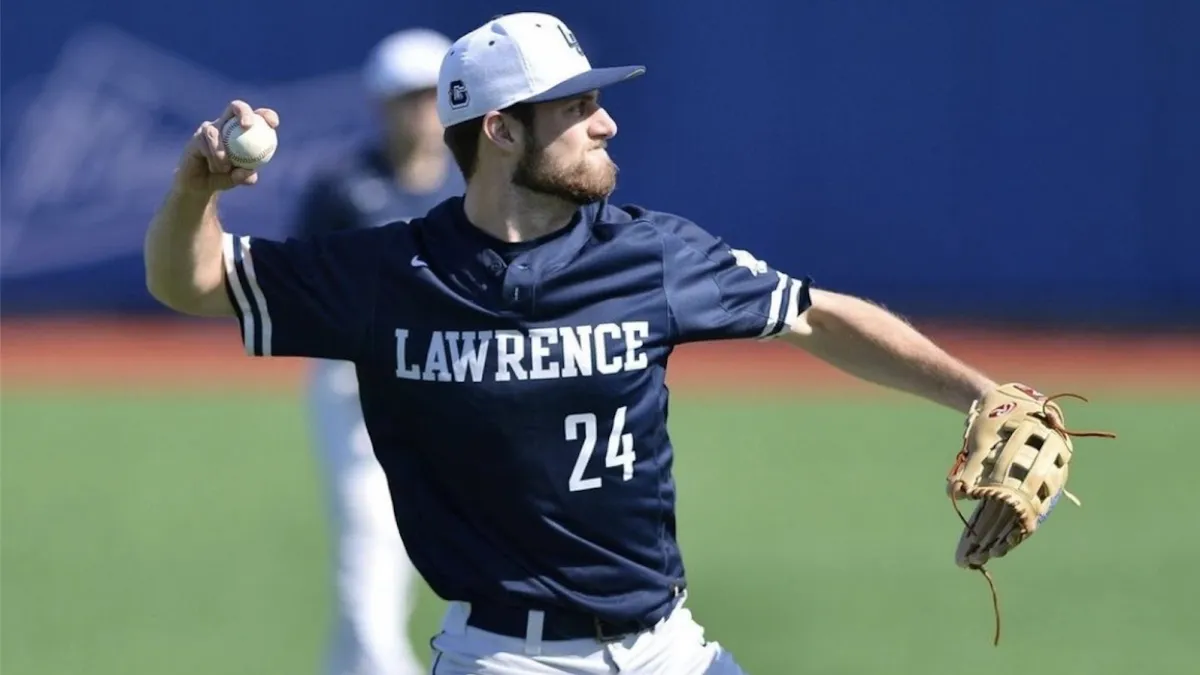
Jake Land is graduating this spring with a master’s degree in sports psychology from Arizona State University’s New College of Interdisciplinary Arts and Sciences. Above, Land plays as third baseman captain for Lawrence University. Courtesy photo
For Jake Land, sports psychology is more than a degree, it is a calling shaped by years of athletic experience, curiosity about the mind and a deep belief that failure can be one of the most powerful tools for growth.
As one of the first graduates of Arizona State University’s New College of Interdisciplinary Arts and Sciences master’s program in sports psychology — part of the inaugural cohort following the program’s launch in fall 2024 — Land is already putting that philosophy into practice through hands-on work with athletes, faculty mentorship and a growing career in performance and mental wellness.
Land’s path to graduate school was driven by a desire to better understand how athletes respond to pressure, setbacks and self-doubt, especially in sports where resilience matters as much as skill.
From early research on failure to fieldwork with teams and internships that helped shape the new program, his time at ASU has been defined by learning, adaptation and opportunity.
Now, as he steps into a leadership role at the Arizona Center for Neurofeedback as the director of sports psychology and an assistant manager, Land hopes to continue building programs that help others strengthen both their performance and their mental health.
Question: What was your “aha” moment when you realized you wanted to study sport psychology?
Answer: Athletics have always been a huge part of who I am, especially baseball. It’s a sport built on failure. If you fail seven out of ten times, you’re considered great. That fascinated me. I became really interested in how failure can be used as a tool instead of something to fear. That curiosity led me to study psychology as an undergraduate, focus my senior project on failure, and ultimately continue exploring how mindset shapes performance in sports.
Q: Why did you choose ASU’s New College?
A: ASU was one of the only places offering sports psychology, which made the decision easier. I also wanted to stay close to family here in Arizona. Once I arrived, what stood out most was the support system. Even when the program was new, faculty were committed to helping me reach my goals.
Q: What’s something you learned at New College that surprised you or changed your perspective?
A: The level of support and willingness to build opportunities for students really surprised me. They genuinely care about each student’s dreams and aspirations and help guide you toward achieving them. Yes, you earn the degree and get to walk across the stage, but I realized early on that their true goal is to set you up for success in your future. That mindset made a huge difference.
Q: Was the sport psychology field what you expected?
A: Not at all, and that’s a good thing. There were moments no textbook could prepare me for, like working on the sidelines during intense games and supporting athletes through real injuries and high-pressure situations. Those hands-on experiences showed me what the field is really like.
Q: Which professor taught you the most important lesson while at New College, and what was that lesson?
A: Professor John Coffey. His research methods class wasn’t easy, but he was direct and honest. He emphasized that if you want to achieve your goals, you have to work for them. I appreciated that he didn’t sugarcoat things. He encouraged me to push myself, take advantage of every opportunity to learn and grow, and understand that success comes through dedication and persistence.
Q: What’s the best advice you’d give to someone considering college?
A: You don’t need to have everything figured out. Just keep doors open. If you decide not to pursue college, that opportunity can close, and it’s harder to go back later. Stay open to possibilities and take advantage of opportunities when they come.
Q: What advice would you give someone considering sports psychology?
A: You have to be willing to put yourself out there. This field is about building relationships, connecting with people and gaining real-world experience. You’ll learn the skills along the way, but you need to take that first step and be ready to grow from failure.
Q: Can you share a moment when you failed and what you learned?
A: I once gave my first workshop to an ASU team and felt like I completely failed. I was nervous, rushed through everything and didn’t feel confident. But afterward, the athletes told me it was helpful and impactful. That taught me an important lesson: what feels like failure to you can still make a difference to someone else.
Q: What are your plans after graduation?
A: I’ve accepted a full-time role at the Arizona Center for Neurofeedback as the director of sports psychology and an assistant manager. I started there as an intern and worked my way up. I’m excited to build programs, lead a team and make an immediate impact in the community.
Q: Where do you see yourself in 10 years?
A: I’d love to expand our practice across Arizona and help build strong, evidence-based programs, especially for athletes and veterans dealing with challenges like anxiety and PTSD. Long term, I want to grow something that makes a meaningful difference in people’s lives.